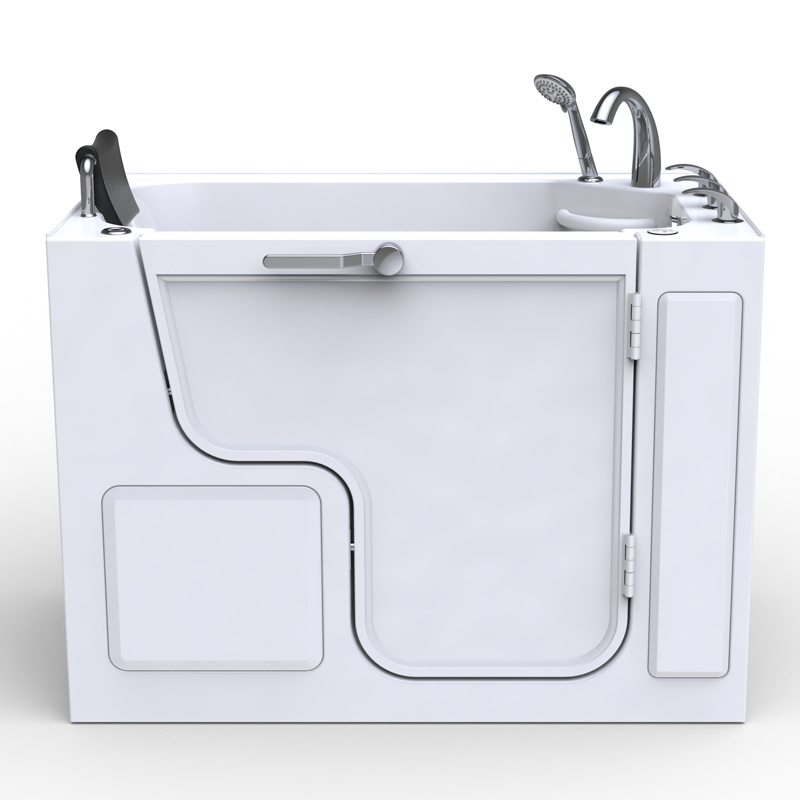
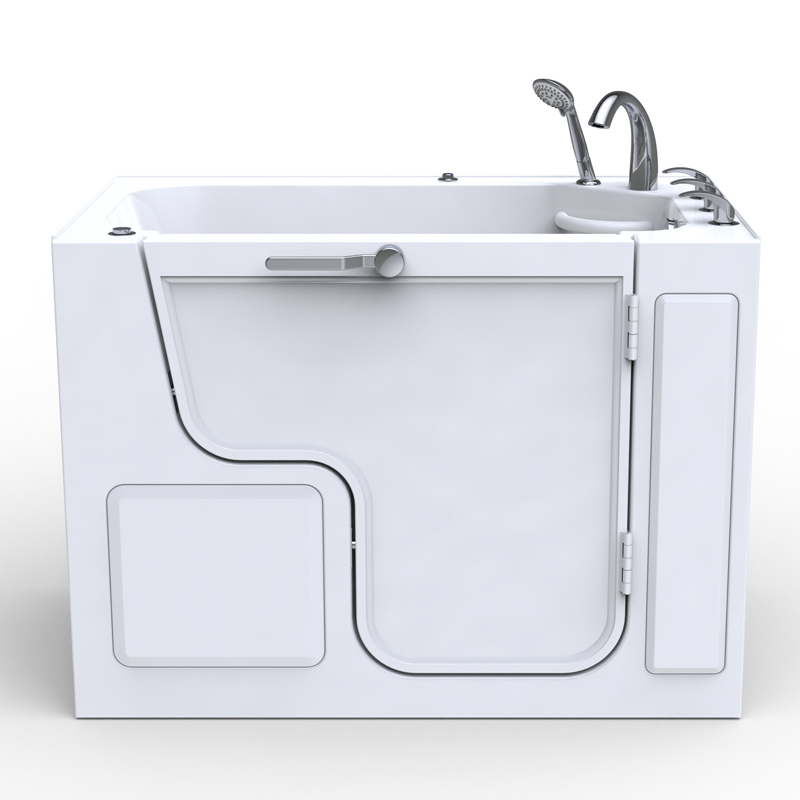
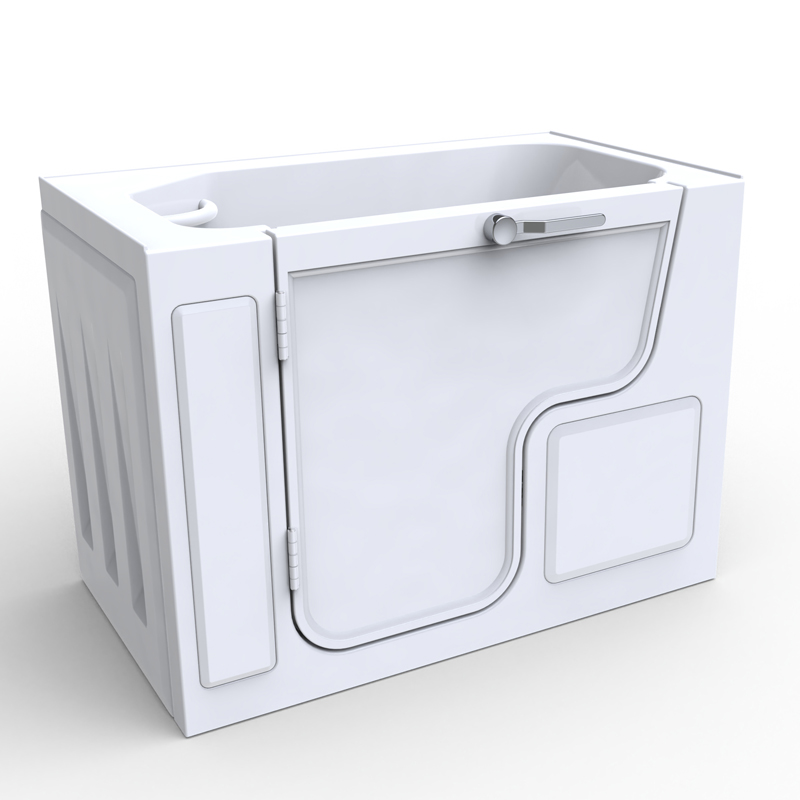
When you invest in a walk-in bath, you are not simply buying a bathing solution — you are investing in your safety, independence, and comfort for years to come. Yet many buyers focus exclusively on visible features like jets, seats, and door width, without asking a fundamental question: what is the bath actually made of, and how strong is it? Fibreglass reinforcement is one of the most important structural decisions a walk-in bath manufacturer makes, and understanding why it matters will help you choose a product built to genuinely last.
What Is Fibreglass Reinforcement and Why Does It Matter?
A walk-in bath begins life as an acrylic shell — a smooth, lightweight surface that provides the finished interior you see and feel. Acrylic on its own, however, is relatively thin and flexible. Without additional support, it would flex underfoot, creak under load, and gradually deform over years of use. Fibreglass reinforcement is the structural layer applied to the underside of the acrylic shell that transforms it from a decorative surface into a robust, load-bearing product.
Fibreglass — a composite of fine glass fibres set in resin — bonds permanently to the acrylic during manufacture. The result is a rigid, unified structure far stronger than either material could achieve alone. For a walk-in tub that must support the combined weight of a user, water, and the stresses of daily entry and exit, this composite construction is not optional. It is essential.
The Strength Advantage: Built to Bear Real Loads
A walk-in bath faces compressive and dynamic loads that a standard bath simply does not. The user steps in and sits down — often using the door frame or built-in grab bar for support — placing concentrated force on specific points of the tub floor and seat. At the same time, a full walk-in shower bath holds a significant volume of water, and the combined weight of water plus bather can be considerable.
Fibreglass reinforcement distributes these loads evenly across the entire shell rather than allowing stress to concentrate at any single point. This prevents the floor from flexing when stood upon, keeps the seat firm and stable, and ensures the walls of the bath do not bow or deform under hydraulic pressure. The bath performs exactly as it should, every time, without any of the subtle movement that undermines confidence — particularly for elderly users who depend on the tub feeling absolutely solid beneath them.
Three Layers: The Odyssey Baths Approach to Longevity
At Odyssey Baths, our walk-in baths are reinforced with three distinct layers of fibreglass, applied sequentially to the acrylic shell. This is not a minor refinement — it is a meaningful structural commitment that sets our products apart from single-layer alternatives.
Each additional layer adds compressive strength, impact resistance, and rigidity. Where a single layer might be sufficient under ideal conditions, three layers provide the redundancy needed for a product in daily use across 15 to 25 years. The first layer bonds directly to the acrylic, creating the primary structural interface. The second adds depth and stiffness, eliminating any residual flex in the shell. The third provides a final margin of strength that ensures the bath performs consistently even as the product ages and materials experience the natural effects of thermal cycling and repeated load.
The practical result is a walk-in bath that does not creak, does not flex underfoot, does not develop stress cracks around high-load areas, and does not gradually soften or distort with age. Three-layer construction is how a walk-in bath stays feeling new a decade after installation.
Weight Capacity: Why Reinforcement Directly Protects Users
One of the most important — and least discussed — specifications of any walk-in tub is its weight capacity. A reinforced shell directly determines how much load the bath can safely support without structural compromise. Walk-in baths are designed for users who may have reduced mobility, higher body weights, or both. A bath that is inadequately reinforced may meet its stated capacity on paper while offering little margin for the dynamic loads created by movement, entry, and exit.
Fibreglass reinforcement built to a genuine standard gives a walk-in bath shower the weight capacity to accommodate a wide range of users safely and confidently. It also means the bath retains that capacity throughout its lifespan, rather than gradually weakening as a thinner shell would under repeated stress.
A Long-Term Investment That Holds Its Structure
A walk-in bath is not a product you replace every few years. Properly constructed with multi-layer fibreglass reinforcement, a walk-in bath should serve its user for the full duration they need it — without repairs, without structural deterioration, and without the anxiety of a product that begins to feel unstable. Fibreglass reinforcement is what makes that promise possible. It is the difference between a bath built to a price and a bath built to last.