Why Low Step-In Height Is a Game-Changer for Mobility Users
For anyone living with reduced mobility, even a small obstacle can become a significant challenge. One of the biggest barriers in a traditional bathroom is stepping over the high side of a standard bathtub. While many people take this movement for granted, individuals with arthritis, hip problems, knee pain, muscle weakness, or balance difficulties often find it uncomfortable, painful, or even dangerous.
A low step-in height has transformed the bathing experience for thousands of people by making access much safer and more comfortable. It reduces the physical effort required to enter and exit the bath while helping users maintain their independence for longer. For disabled tub wholesalers, understanding the importance of this feature allows them to offer products that genuinely improve everyday life.
Why Traditional Bathtubs Create Problems
A conventional bathtub usually requires a user to lift one leg well above knee height before carefully transferring their weight into the bath. This movement places considerable strain on several parts of the body, including:
Hip joints
Knee joints
Ankles
Lower back
Core muscles
For someone with limited mobility, this combination of movements can increase the risk of losing balance. Even if a fall does not occur, the fear of falling often discourages people from bathing independently.
Many users begin avoiding baths altogether because they simply no longer feel safe using a traditional bathtub.
The Advantage of a Low Step-In Height
A low step-in height dramatically reduces the amount of leg lift required to enter the bath. Instead of stepping over a high side, the user only needs to make a much smaller movement.
This offers several important benefits:
Reduced Hip Flexion
People suffering from hip arthritis or recovering from hip replacement surgery often have limited flexibility.
A lower threshold means the hip does not need to bend as far, making entry much more comfortable while reducing pain during movement.
Less Pressure on the Knees
Individuals with worn cartilage, osteoarthritis or previous knee injuries frequently struggle when lifting the leg high enough to clear a traditional bath.
Reducing the step height places far less stress on the knee joint and surrounding muscles.
Improved Stability
Smaller stepping movements are naturally more stable than larger ones.
The lower the step, the easier it becomes to keep the body's centre of gravity balanced throughout the movement.
This greatly reduces the likelihood of slips or loss of balance.
Helping Users Remain Independent
Maintaining independence is one of the biggest priorities for many older adults and disabled individuals.
Needing assistance with bathing can sometimes affect confidence and reduce personal privacy.
A bath featuring a low step-in height allows many people to continue bathing without requiring assistance from family members or carers.
This helps preserve:
Independence
Privacy
Confidence
Dignity
Quality of life
Many disabled tub companies now design their products specifically around these principles rather than simply making bathing possible.
Combined with Easy-Access Doors
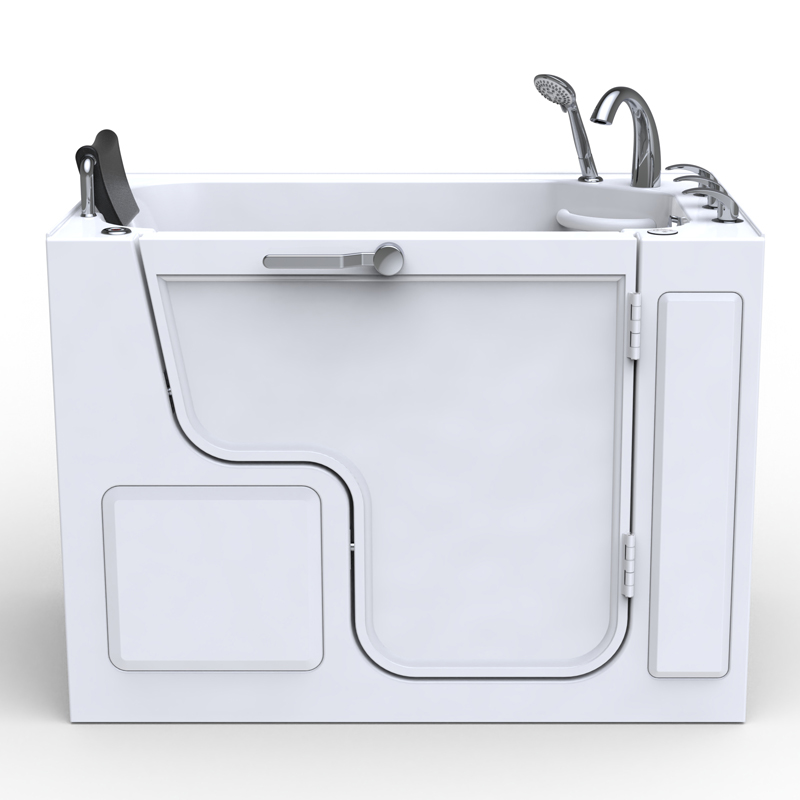
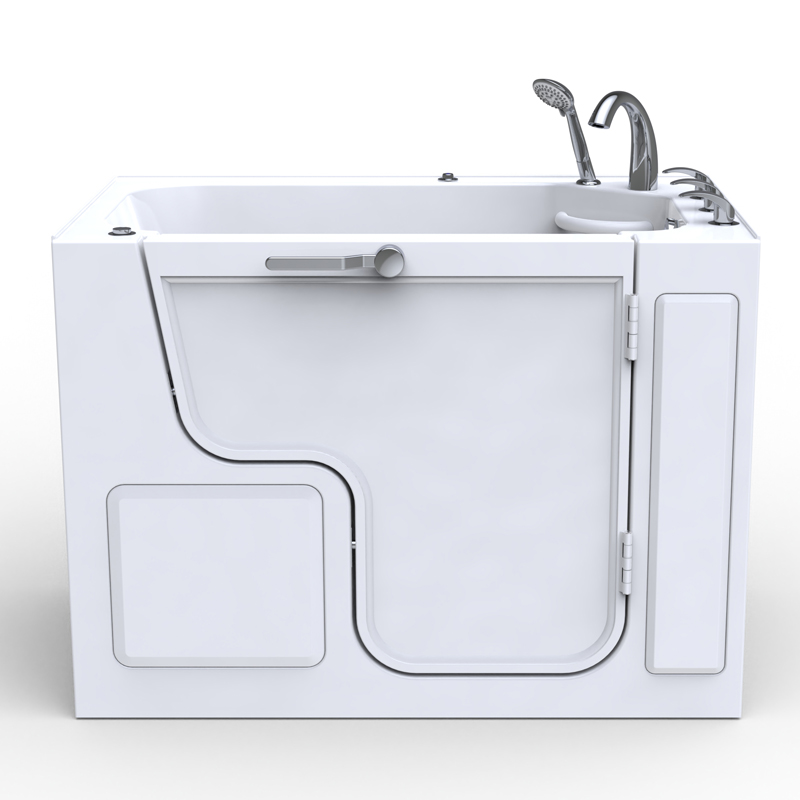
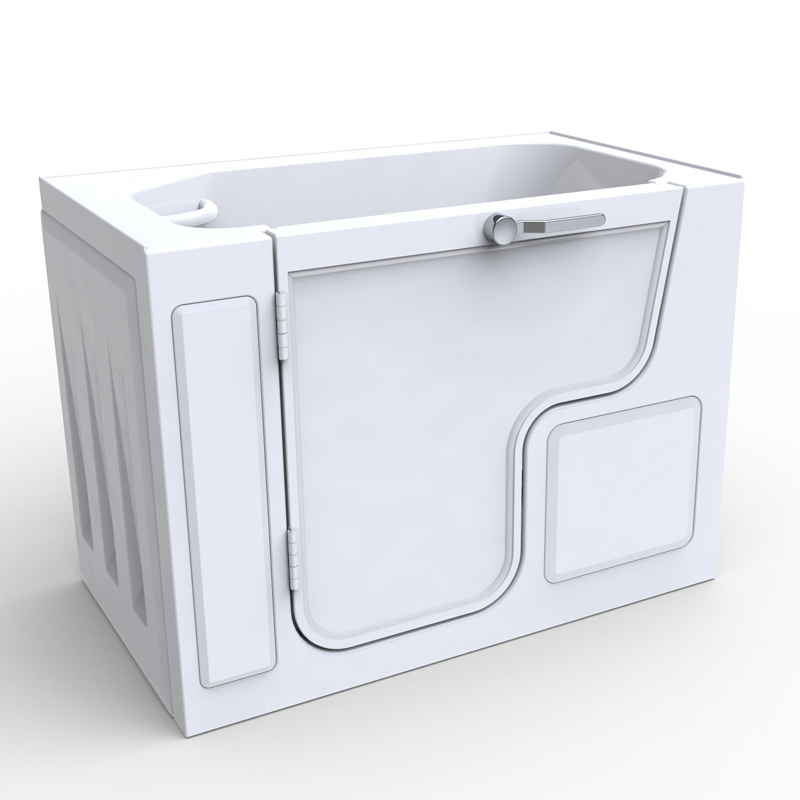
Low step-in height becomes even more effective when combined with an inward or outward opening watertight door.
Instead of climbing over the bath wall, users simply:
Open the door.
Take one small step inside.
Sit comfortably.
Close the door.
Fill the bath.
The entire process feels significantly safer than attempting to climb over the side of a conventional bathtub.
Many disabled tub trade suppliers now consider low entry thresholds to be one of the most requested features by occupational therapists and mobility specialists.
Supporting People with Different Mobility Conditions
A low step-in design benefits people with a wide range of medical conditions.
Arthritis
Reduced joint movement makes high stepping painful.
A lower threshold minimises joint strain.
Hip Replacements
Following surgery, many patients are advised not to excessively flex the hip.
Lower entry heights help users remain within recommended movement limits.
Knee Replacements
The reduced lifting motion places much less stress on recovering joints.
Parkinson's Disease
Controlled, shorter movements improve confidence and reduce instability.
Multiple Sclerosis
Users experiencing muscle weakness or fatigue benefit from requiring less physical effort.
Stroke Recovery
Many stroke survivors have weakness affecting one side of the body.
Reducing the height they must step over makes transferring into the bath considerably easier.
Reducing the Risk of Falls
Falls in bathrooms remain one of the leading causes of injury among older adults.
Wet floors combined with awkward stepping movements create an environment where accidents can occur very quickly.
A low step-in height reduces several common risk factors:
Smaller stepping movement
Better balance during entry
Reduced twisting of the body
Less overreaching
More controlled weight transfer
When combined with slip-resistant flooring, grab rails and built-in seating, the overall bathing experience becomes significantly safer.
An Important Feature for Occupational Therapists
Occupational therapists often assess bathrooms to identify modifications that allow individuals to remain safely in their own homes.
Low step-in height is regularly recommended because it addresses one of the biggest physical barriers found in standard bathrooms.
Rather than relying on lifting strength or flexibility, users can make a simple controlled step into the bath with far less effort.
Because of this, many disabled tub trade supplier networks work closely with healthcare professionals when selecting products for residential installations.
A Valuable Selling Point for the Mobility Industry
For retailers, distributors and disabled tub wholesalers, low step-in height is much more than a design feature—it is a genuine solution to one of the biggest challenges faced by mobility users.
Customers are increasingly looking beyond appearance and focusing on products that offer practical improvements to everyday living.
Manufacturers continue investing in innovative door systems, stronger seals and lower entry designs because they understand how important safe accessibility has become.
Working with experienced disabled tub wholesaler businesses ensures retailers can provide products that meet the growing demand for safer, more accessible bathing solutions.
Conclusion
A low step-in height may seem like a simple feature, but its impact on everyday life is substantial. By reducing the effort needed to enter and exit the bath, it makes bathing safer, more comfortable and far less intimidating for people with limited mobility.
Whether someone is living with arthritis, recovering from surgery, managing a neurological condition or simply finding movement more difficult with age, lowering the step into the bath can significantly improve both safety and independence.
As demand for accessible bathrooms continues to grow, disabled tub companies, disabled tub wholesalers, disabled tub wholesaler, disabled tub trade suppliers, and every disabled tub trade supplier have an important role in providing products that help people remain independent in their own homes for as long as possible. Low step-in height is one of the most valuable innovations in modern accessible bathing, delivering greater confidence, reduced risk of falls and a better quality of life for mobility users every day.