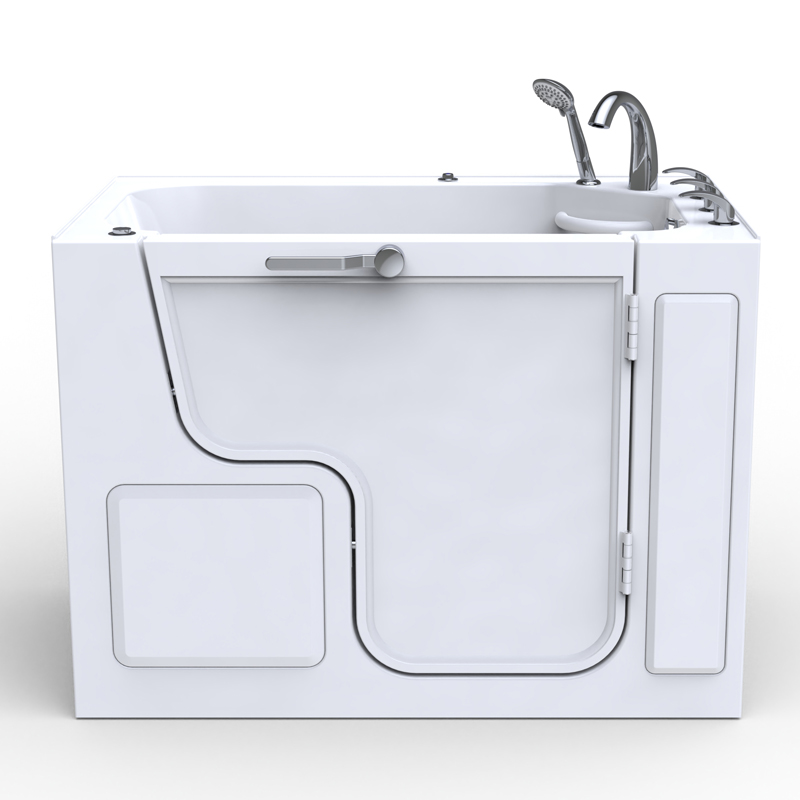
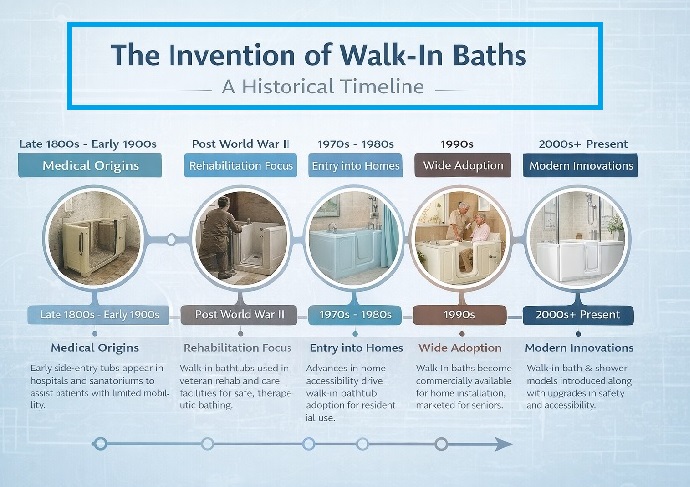
Walk-in baths were not a sudden modern invention but the result of gradual development driven by medical and social needs. The earliest concepts appeared in the late 19th and early 20th centuries in hospitals and sanatoriums across Europe and North America. These early designs were created to help patients with limited mobility bathe safely without climbing over high bath sides, reducing the risk of injury for both users and carers.
Following the Second World War, walk-in baths became more common in rehabilitation centres and veteran care facilities. The growing number of people living with long-term injuries highlighted the importance of accessible bathing solutions. At this stage, designs were still functional and industrial, focused on safety rather than appearance.
From the 1970s onwards, advances in materials such as acrylic allowed walk-in baths to move into private homes. Lighter construction, improved door seals, and better ergonomics made them suitable for residential bathrooms. By the 1990s, walk-in baths were commercially available and increasingly marketed to older homeowners.
In the 21st century, innovation has continued with improved safety standards, refined aesthetics, and the introduction of walk-in bath & shower combinations. Today’s walk-in baths reflect over a century of practical problem-solving aimed at safe, independent, and dignified bathing.
2026-01-06
More